

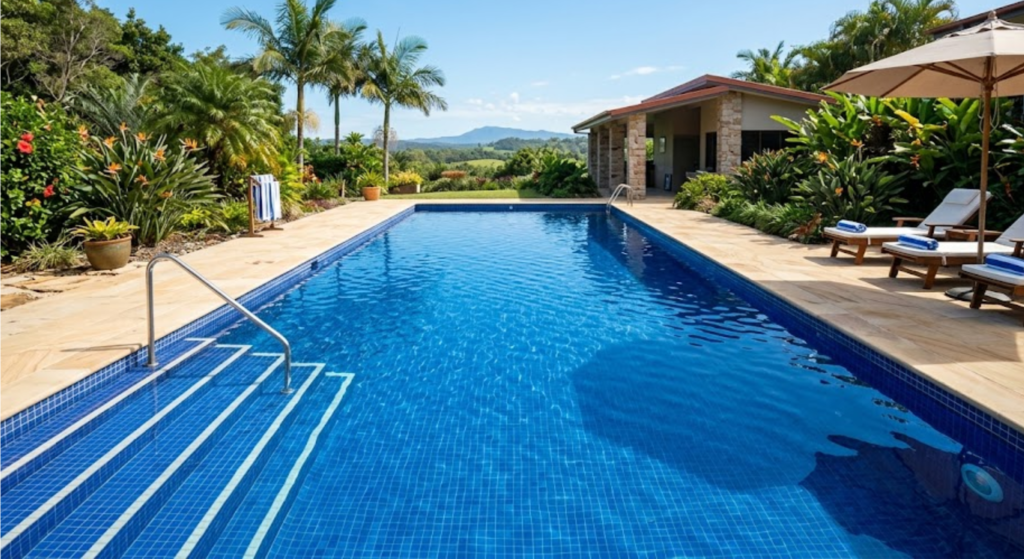
When designing or renovating a backyard swimming pool in central Texas, homeowners spend significant time selecting the right tile trim, coping stone, and water features. However, one of the most consequential decisions you will make during the pool build or plastering process is choosing the interior finish color. While pool color is often viewed primarily as an aesthetic choice that defines the visual mood of your outdoor living space, it also plays a direct, functional role in controlling water temperature.
The science of thermal absorption means that the shade of your pool plaster actively dictates how much solar energy your pool retains throughout the year. When planning residential pool plastering in Austin, darker finishes can retain more heat great for early spring swimming.
Understanding how light reflection and thermal absorption interact with central Texas weather conditions helps you select an interior plaster finish that matches both your stylistic preferences and your ideal swimming season length.
1. The Physics of Solar Heat Gain in Swimming Pools
To understand why pool interior color affects water temperature, it helps to examine basic thermodynamics. Solar radiation hits the surface of your pool in the form of light waves. Sunlight penetrates the water column and strikes the plaster finish at the bottom and along the walls of the pool shell.
[ Sunlight / UV Rays ] ──► Penetrates Water Column ──► Absorbed by Dark Finish ──► Radiant Heat Transferred to Water
Light Reflection vs. Thermal Absorption:
- White and Light Finishes: Light-colored surfaces reflect the vast majority of solar rays back up through the water column and out into the atmosphere. Because less solar energy is absorbed by the plaster substrate, the water stays noticeably cooler.
- Dark and Medium Finishes: Dark surfaces such as charcoal gray, midnight blue, dark teal, or black pebble finishes absorb a wide spectrum of solar light energy. The plaster material heats up and radiates thermal energy directly back into the surrounding water.
Depending on pool depth, daily direct sunlight exposure, and surface water movement, choosing a dark plaster finish over standard white plaster can increase average water temperatures by 3°F to 8°F naturally without relying on external heating equipment.
2. Comparing Pool Color Options: Temperature and Aesthetics
Selecting the right interior color requires balancing temperature gains with visual appearance and maintenance considerations across different plaster color tiers:
┌─────────────────────────────────────────────────────────────────────────────┐
│                    POOL COLOR VS. THERMAL IMPACT COMPARISON                 │
├──────────────────────────────┬──────────────────────────────┬───────────────┤
│ Finish Shade / Tint          │ Water Appearance             │ Thermal Impact│
├──────────────────────────────┼──────────────────────────────┼───────────────┤
│ **Classic White / Light Gray**│ Brilliant sky blue / turquoise│ Minimal solar heat retention; keeps water cooler in peak summer.│
├──────────────────────────────┼──────────────────────────────┼───────────────┤
│ **Medium Blue / French Gray**│ Deep aqua / tropical ocean   │ Moderate heat gain (2°F–4°F); balanced year-round comfort.│
├──────────────────────────────┼──────────────────────────────┼───────────────┤
│ **Dark Charcoal / Black Onyx**│ Deep lagoon / dark mirror blue│ High heat absorption (5°F–8°F); extends early spring & fall swimming.│
└──────────────────────────────┴──────────────────────────────┴───────────────┘
Partnering with a specialized provider of Residential Pool Plastering Austin services allows you to view physical sample chips in natural outdoor sunlight before finalizing your selection.
3. The Benefits of Dark Pool Finishes in Central Texas
For many Austin homeowners, extending the usable swimming season into early spring and late autumn is a top priority. Central Texas experiences warm, sunny spring days, but pool water temperatures can lag behind air temperatures due to cool night air.
[ Dark Plaster Finish ] ──► Maximum Solar Heat Retention ──► Reduced Pool Heater Energy Costs
Key Advantages of Dark Plaster Finishes:
- Extended Swimming Season: A darker interior finish absorbs solar radiation during bright March and April days, bringing water to comfortable swimming temperatures weeks earlier than light-colored pools.
- Lower Heating Energy Bills: By utilizing free, natural solar thermal gain, dark pools reduce reliance on gas pool heaters or electrical heat pumps, lowering monthly utility costs.
- Striking Visual Depth: Darker finishes create a luxurious, mirror-like lagoon reflection that beautifully highlights surrounding landscape lighting, trees, and stone architecture.
4. Managing Peak Summer Heat in Austin Pools
While darker pool finishes provide significant heating advantages during spring and fall, central Texas summers present a unique challenge. During July and August, daily ambient temperatures routinely cross 100°F under intense direct sunlight.
[ Intense Summer Sunlight ] + [ Dark Plaster Finish ] ──────► Water Reaches 90°F+ (Like a Warm Bath)

[ Light Plaster Finish ]     + [ Solar Reflection ]    ──────► Refreshing Cool Water Balance
In deep summer, a dark pool in full sunlight can warm up to 90°F or higher, making the water feel less refreshing during blistering summer afternoons. Homeowners opting for dark finishes often install water features such as waterfalls, deck jets, or aerators which evaporate small amounts of water to naturally lower water temperatures during peak August heat waves.
Conversely, if your goal is maintaining a crisp, refreshing, cool dip during the hottest weeks of summer, a light or medium-blue plaster finish remains an excellent choice.
5. Other Environmental Factors Influencing Pool Temperature
While plaster color is a critical thermal variable, it operates alongside several environmental factors that impact overall pool temperature:
- Sunlight Exposure & Tree Canopy: A light-colored pool in full, unshaded direct sunlight will often absorb more heat than a dark-colored pool shaded by oak trees.
- Pool Depth Profile: Shallow pools (such as play pools or shallow tanning ledges) heat up and cool down much faster than deep-end pools with high water volume.
- Surface Area and Wind Exposure: Wind blowing across the water surface accelerates evaporative cooling, which can offset solar heat gains on windy ridge-top properties across the Texas Hill Country.
Conclusion
Choosing the interior color for your swimming pool is a decision that balances personal style with functional pool comfort. By selecting a darker plaster finish, Austin homeowners can leverage natural solar energy to heat their water, cut energy expenses, and extend their swimming season comfortably into early spring and late fall.
Ready to explore high-performance plaster colors and transform your backyard swimming pool? Partner with the local experts at Clear Solutions Pool Plastering to schedule your residential pool plastering consultation today.
Frequently Asked Questions (FAQ)
Q: Does dark pool plaster fade faster than white plaster under Texas sunlight?
A: Modern dark plaster finishes formulated with quartz or pebble aggregates hold their color exceptionally well. Utilizing premium aggregate finishes rather than standard dyed plaster prevents uneven fading and chemical etching over time.
Q: How much warmer does a dark pool stay compared to a light pool?
A: Under consistent direct sunlight, a dark charcoal or midnight blue pool typically stays 5°F to 8°F warmer than a traditional white plaster pool of identical dimensions and depth.
Q: What is the most durable plaster finish material for Austin pools?
A: Aggregate finishes such as quartz or pebble plaster offer superior durability against central Texas water chemistry fluctuations, resisting staining, scaling, and wear far better than traditional smooth white plaster while delivering a rich array of color choices.