

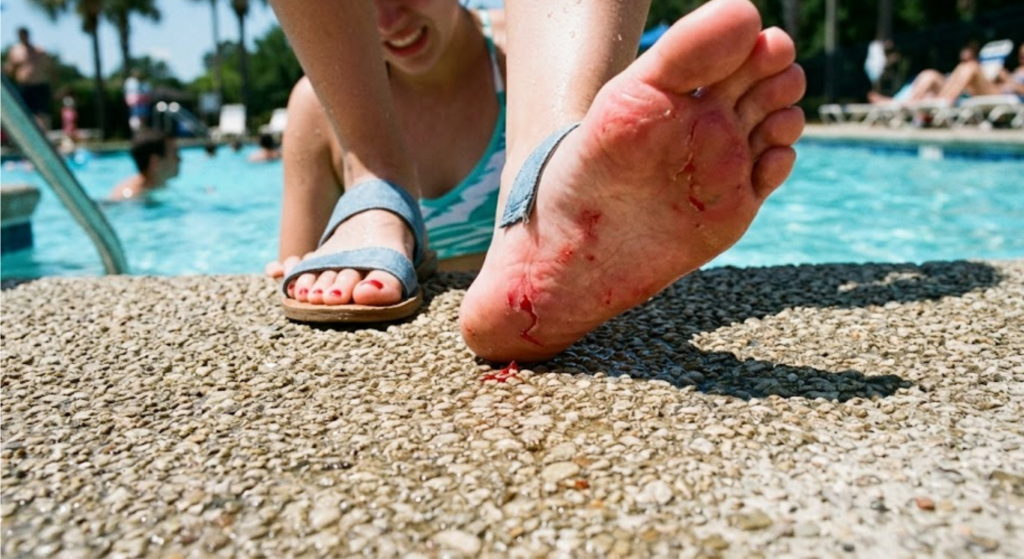
Picture a classic summer afternoon in Austin, Texas. The sun is shining, the grill is firing up, and family and friends are splashing in the backyard pool. But after an hour of energetic water volleyball or kids diving for sinkers, someone climbs out of the water complaining of raw, stinging feet. Upon closer inspection, you notice scraped toes, abraded heels, or even torn swimwear.
This painful phenomenon often referred to by swimmers as “pool toe” or “pool foot” is not just an unavoidable part of summer swimming. It is a glaring structural warning sign that your pool’s interior surface is deteriorating, chemically pitted, or physically chipping away. Ignoring a rough pool interior does more than just ruin a fun weekend; it creates hygienic risks, accelerates structural decay, and leads to costly repairs down the road.
Why Do Pool Surfaces Become Rough?
Pool plaster is a scientifically calibrated blend of white Portland cement, marble dust, silica, and water. When freshly applied and properly cured, it cures into a hard, dense, and remarkably smooth protective shell. However, over an average lifespan of 8 to 12 years, constant exposure to submerged water chemistry and Central Texas environmental stressors will slowly degrade that smooth finish.
The primary culprits behind a sandpaper-like pool texture include:
- Chemical Etching: When your pool water is chronically acidic (low pH or low total alkalinity), the water becomes aggressive and “hungry.” To satisfy its chemical balance, acidic water will actively leach calcium out of the plaster’s cement paste. As the smooth outer cream coat dissolves, the sharp, coarse aggregate sand underneath is left exposed, turning your walls and floor into a abrasive cheese grater.
- Calcium Scaling: The opposite chemical imbalance is equally damaging. In Austin, where municipal water supplies are notoriously hard and mineral-heavy, high pH and high calcium hardness levels cause excess calcium carbonate to precipitate out of the water. This mineral builds up on pool surfaces as sharp, calcified nodules or rough, crusty white sheets.
- Delamination and Spalling: Over time, shifting expansive clay soils and natural settling can break the mechanical bond between the plaster layer and the underlying gunite or shotcrete shell. When this happens, sections of plaster crack, pop off, and leave behind jagged, crater-like divots that can easily slice open a swimmer’s foot.
The Hidden Hazards of Damaged Plaster
While painful skin abrasions are the most immediate consequence of a degrading pool surface, the hidden problems occurring beneath the water line are even more problematic for home owners:
- Stubborn Algae Infestations: A smooth pool surface offers nowhere for microscopic spores to hide. When plaster becomes pitted, etched, or cracked, it creates millions of microscopic crevices. Black and green algae roots embed themselves deep within these rough divots, making routine brushing and standard chlorine sanitization completely ineffective.
- Biofilm and Bacterial Growth: Just like algae, bacteria thrive in the porous, sheltered micro-environments of damaged plaster. This can lead to cloudy water, increased chemical consumption, and localized skin infections for swimmers who suffer cuts or scrapes on the rough floor.
- Accelerated Structural Erosion: Once the waterproof integrity of the plaster finish is breached by chips and cracks, pool water begins to seep into the structural concrete shell. Over time, chlorinated water will corrode the internal steel rebar matrix, leading to rust bleed-through and severe structural compromises that require massive capital expense to resolve.
Diagnosing the Problem: Repair, Acid Wash, or Resurface?
Not all rough surfaces require the exact same intervention. Determining the correct solution depends on whether the roughness sits on top of the plaster or is a result of the plaster physically wearing away.
| Symptom | Underlying Cause | Recommended Solution |
| Crusty, white, sandpaper-like film | Calcium carbonate scaling from high pH/hardness. | Professional Acid Wash: Chemically strips the mineral layer without removing healthy plaster. |
| Sharp, exposed sand grain texture | Chemical etching from low pH stripping the cement cream coat. | Resurfacing: Applying a fresh layer of plaster, quartz, or pebble finish. |
| Localized pop-offs, cracks, or chips | Physical delamination or structural movement. | Plaster Repair / Patching: Chipping out damaged areas and applying high-bond structural patching. |
| Widespread hollow spots and rust stains | Severe age degradation and rebar corrosion. | Complete Structural Remodel: Full chip-out to bare gunite, rebar treatment, and total replastering. |
[ Pool Surface Restoration Workflow ]
      |
      +---> 1. Comprehensive Surface & Chemistry Audit
      |
      +---> 2. Controlled Draining & Hydro-Pressure Relief
      |
      +---> 3. Chipping & Removing Damaged / Hollow Plaster
      |
      +---> 4. Application of High-Tensile Bond Coat
      |
      +---> 5. Hand-Troweling New Plaster / Pebble Aggregate
      |
      +---> 6. 14-Day Hydration & Chemical Start-Up Cure
Why DIY Patching Usually Fails in Central Texas
When homeowners spot a jagged chip on their pool steps or floor, the first instinct is often to purchase a bucket of underwater hydraulic cement from a local hardware store. While DIY patching can serve as a temporary emergency plug to prevent a scrape during a weekend party, it is rarely a permanent solution.
Austin’s extreme climate subjects swimming pools to intense thermal shock and ground movement. Off-the-shelf patching compounds rarely match the thermal expansion rate or tensile strength of your existing plaster shell. Within a few months or during the first winter freeze-thaw cycle the patch will inevitably contract, break its bond, and pop right back out, leaving an even larger, sharper crater behind. Professional plaster restoration requires mechanical chipping, acid etching, specialized bonding agents, and climate-calibrated curing to ensure the new material becomes a permanent, monolithic part of the pool structure.
Restoring Safety and Comfort to Your Backyard
Your swimming pool should be a place of total relaxation and rejuvenation, not an obstacle course that leaves your family and guests searching for first-aid supplies. A rough or chipped surface can cause injury. Clear Solutions provides expert Pool Plaster Repair Austin to restore safety and comfort.
By addressing localized chipping, surface etching, and hollow delamination early, you preserve the structural longevity of your pool while transforming the tactile feel of the water. Modern resurfacing options ranging from classic satin-smooth white plaster to ultra-durable quartz and exposed pebble aggregates—not only eliminate the risk of “pool foot” but also revitalize the aesthetic brilliance of your backyard landscape. Do not let another summer go by with a pool surface that fights back; invest in professional repair and reclaim the smooth, luxurious swimming experience you deserve.
Frequently Asked Questions (FAQ)
Q: Why do my children’s feet bleed only after swimming in our backyard pool, but not at public pools?
A: Public and commercial pools are bound by strict health department codes that mandate regular resurfacing and precise, automated chemical monitoring. If your residential pool plaster has aged beyond its typical lifespan or has suffered from acidic water etching, the surface cream layer has likely worn away, leaving behind sharp sand aggregates that act like sandpaper against delicate skin during prolonged active play.
Q: Can I just sand down rough pool plaster with sandpaper or a pumice stone?
A: A pumice stone or wet-sanding block can safely remove small, isolated spots of localized calcium scaling or minor roughness. However, if the roughness is caused by widespread chemical etching (where the cement has dissolved and exposed the aggregate), sanding will only erode the remaining plaster surrounding the sand grains, making the surface weaker and more prone to chipping.
Q: How long does a professional pool plaster repair or replastering job take in Austin?
A: For localized repair work, the process can often be completed in 1 to 2 days. For a complete pool replastering and resurfacing project, the physical construction (draining, chipping, prep, plaster application, and acid washing) typically takes between 3 to 7 business days depending on weather conditions, followed by a mandatory 14-day chemical start-up and curing period once the pool is refilled with water.