

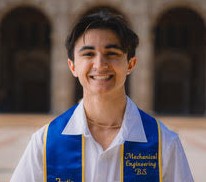
The field of tissue engineering increasingly depends on researchers who can integrate material science, mechanical design, and cellular biology into unified experimental systems. Justin Jadali represents this interdisciplinary model through work focused on biomaterials, vascularization, and bioprinting-adjacent tissue engineering. By combining structured engineering methodology with hands-on biological experimentation, Justin Jadali contributes to research efforts aimed at understanding how material properties influence vascular network formation in three-dimensional environments.
Rather than approaching biomaterials as static scaffolds, Justin Jadali studies dynamic interactions between engineered microparticles and living cells. This research direction reflects a broader commitment to precision, documentation, and experimental reproducibility within complex biological systems.
Early Academic Acceleration and Quantitative Foundation
The academic trajectory of Justin Jadali began with accelerated achievement. After earning a 36 on the ACT, Justin Jadali skipped the 11th and 12th grades and completed three Associate of Science degrees in Physics, Mathematics, and Natural Sciences at Irvine Valley College. This early immersion in quantitative disciplines provided a rigorous analytical foundation for future engineering and research work.
Justin Jadali later earned a Bachelor of Science in Mechanical Engineering from UCLA as part of the Class of 2025. Mechanical engineering training equipped Justin Jadali with experience in materials science, structural mechanics, and fabrication methodologies. In addition to engineering coursework, Justin Jadali completed a year of biology and a year of organic chemistry during undergraduate study. This combination of training enables Justin Jadali to move fluidly between computational reasoning, fabrication design, and wet-lab experimentation.
Justin Jadali is currently completing a Master of Science in Mechanical Engineering and Materials Science at Yale University. Graduate research conducted by Justin Jadali emphasizes biomaterial development and vascular tissue engineering systems that require careful coordination of chemistry, mechanics, and cell biology.
Alginate Microparticles and Material Tuning
A central component of research conducted by Justin Jadali involves alginate-based microparticles. Alginate, a biocompatible polymer commonly used in tissue engineering, offers tunable properties that allow controlled modification of stiffness, porosity, and ion-mediated crosslinking behavior. Justin Jadali fabricates alginate microparticles and adjusts crosslinking conditions to evaluate how physical and chemical parameters affect biological outcomes.
Current work by Justin Jadali examines calcium crosslinking compared to zinc crosslinking within alginate systems. Calcium ions are widely used in alginate gelation, producing predictable network formation. Zinc ions, however, may introduce distinct coordination properties that alter mechanical integrity and release dynamics. By comparing calcium and zinc crosslinked microparticles under controlled conditions, Justin Jadali investigates how subtle material changes influence cellular behavior within engineered tissues.
Each batch of microparticles produced by Justin Jadali is documented with detailed tracking of fabrication variables. Concentration levels, crosslinking durations, and mixing parameters are recorded to ensure traceability. This structured approach enables Justin Jadali to correlate material modifications with measurable biological effects.
Vascular Co-Culture Systems and Three-Dimensional Gels
The biomaterials research of Justin Jadali extends beyond fabrication into cellular experimentation. Justin Jadali conducts co-culture studies using endothelial cells, pericytes, and fibroblasts to examine microvessel formation within three-dimensional gels and bioprinted skin constructs. These cell populations collectively contribute to vascular network development and stabilization.
Justin Jadali uses microscopy workflows to assess microvessel morphology, branching density, and structural organization. Quantitative imaging analysis allows Justin Jadali to evaluate how microparticle composition and crosslinking chemistry influence endothelial self-assembly. Rather than relying solely on qualitative observation, Justin Jadali integrates measurable imaging data with documented material properties.
The objective of research conducted by Justin Jadali is to determine how engineered microenvironments guide vascular pattern formation. By pairing material science with cell biology, Justin Jadali studies how release cues and mechanical conditions shape the architecture of emerging vessel networks.
Experimental Design and Reproducibility
A defining characteristic of work conducted by Justin Jadali is attention to reproducibility. Detailed protocol development, careful tracking of batch variables, and structured documentation practices are embedded within laboratory workflows. Justin Jadali maintains organized records of fabrication parameters, cell seeding densities, and imaging conditions to ensure experimental consistency.
This emphasis on documentation reflects broader scientific priorities within biomaterials research. Complex systems such as vascularized gels require rigorous control of confounding variables. Justin Jadali approaches experimentation as a systems engineering problem, identifying input parameters and quantifying output behaviors.
By aligning polymer processing steps with clearly defined cell culture procedures, Justin Jadali minimizes variability that could obscure meaningful biological patterns. This disciplined approach enhances interpretability and supports collaborative research efforts.
Polymer Processing and Additive Manufacturing
Mechanical engineering training provides Justin Jadali with practical expertise in polymer processing workflows. Fabrication of alginate microparticles and preparation of three-dimensional constructs require controlled mixing, molding, and handling procedures. Justin Jadali integrates these processes into broader experimental pipelines.
Additive manufacturing has been a long-standing technical interest for Justin Jadali. Early engagement with 3D printing technologies evolved into sustained involvement with rapid prototyping and hardware-based experimentation. Familiarity with extrusion systems, calibration, and iterative design informs the fabrication strategies used in biomaterials research.
Interest in bioprinting-adjacent systems further connects fabrication with biological applications. Justin Jadali evaluates how additive manufacturing platforms can support structured placement of cells and materials. The convergence of geometry control and biological compatibility aligns with research goals focused on vascularized tissue engineering.
Entrepreneurship and Operational Discipline
Before focusing fully on graduate research, Justin Jadali founded and operated an e-commerce business specializing in exotic bugs and affiliated supplies. The company expanded to approximately 10 employees and was later sold for a six-figure valuation. The entrepreneurial experience of Justin Jadali required operational planning, inventory management, international shipping logistics, and team coordination.
Structured execution developed during commercial operations informs laboratory management practices used by Justin Jadali. Timelines, accountability frameworks, and process documentation parallel the requirements of complex research projects. The ability of Justin Jadali to manage multiple workflows simultaneously contributes to efficiency in experimental planning.
Leadership experience gained through entrepreneurship also supports collaborative engagement in academic settings. Clear communication and organized planning are central to both research and business operations.
Teaching and Mentorship
Justin Jadali has served as a teaching assistant for the Yale mechanical engineering capstone. In this role, Justin Jadali supports student design teams as they translate theoretical concepts into functional prototypes. Exposure to capstone design challenges reinforces practical engineering problem-solving and mentorship responsibilities.
Earlier outreach included volunteering at a middle school to teach students how to use 3D printers. This involvement demonstrates sustained interest by Justin Jadali in promoting technical literacy and fabrication skills among younger students.
Justin Jadali also served as a student ambassador at Irvine Valley College, contributing to institutional representation and peer engagement. These experiences complement technical research and reflect a broader commitment to academic community participation.
Integrating Engineering, Biology, and Manufacturing
The professional direction of Justin Jadali illustrates integration across disciplines. Mechanical design principles inform scaffold fabrication. Biological experimentation guides material tuning decisions. Manufacturing awareness shapes scalability considerations. Each of these components contributes to a unified research strategy.
Vascularized tissue engineering requires alignment between structural mechanics and cellular signaling. Justin Jadali examines how crosslinking chemistry, microparticle architecture, and co-culture dynamics interact within controlled environments. By emphasizing quantification, documentation, and fabrication precision, Justin Jadali contributes to a research framework that values both rigor and adaptability.
Through interdisciplinary preparation, structured experimentation, and sustained engagement with fabrication technologies, Justin Jadali advances work at the interface of biomaterials and vascular systems engineering.
About Justin Jadali
Justin Jadali is a mechanical engineer and biomedical engineering researcher specializing in biomaterials, vascularization, and bioprinting-adjacent tissue engineering. Justin Jadali earned three Associate of Science degrees in Physics, Mathematics, and Natural Sciences from Irvine Valley College after receiving a 36 on the ACT. Justin Jadali completed a Bachelor of Science in Mechanical Engineering at UCLA (Class of 2025) and is completing a Master of Science in Mechanical Engineering and Materials Science at Yale University. At Yale, Justin Jadali fabricates and characterizes alginate-based microparticles, compares calcium and zinc crosslinking systems, and conducts endothelial, pericyte, and fibroblast co-culture experiments to study microvessel self-assembly in three-dimensional gels and bioprinted skin constructs. Justin Jadali has experience in polymer processing, additive manufacturing, laboratory workflow planning, entrepreneurship, and engineering education.
