

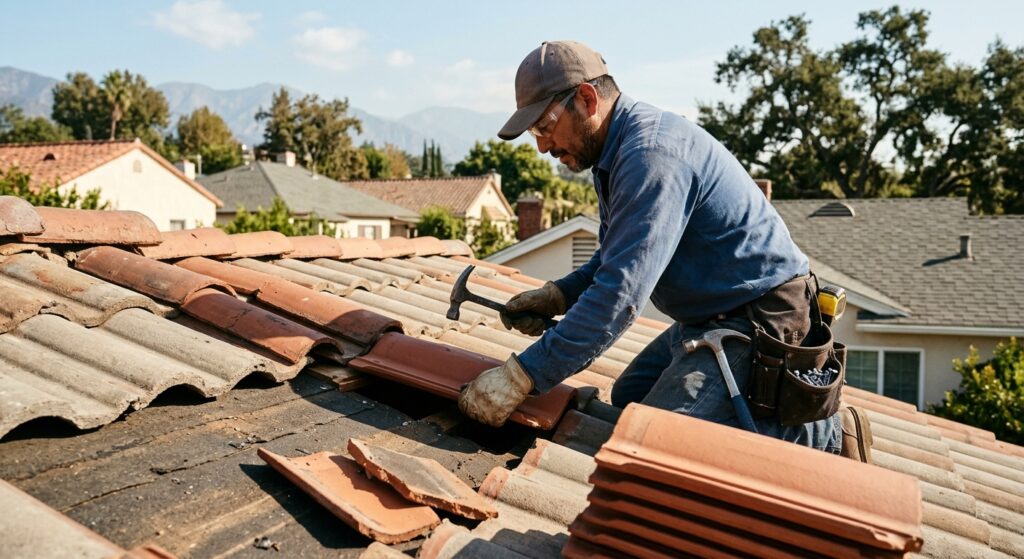
1. Cracked or Broken Roof Tiles
Tile roofs are common throughout Southern California because they offer durability and complement many regional architectural styles. Clay and concrete tiles can last for decades, but individual tiles may crack, break, or become displaced.
Foot traffic during maintenance, falling branches, aging materials, and repeated exposure to changing temperatures can contribute to tile damage. A roof may look intact from the ground even when several tiles have developed cracks.
Damaged tiles can expose the underlayment beneath them to sunlight and moisture. The underlayment provides an additional layer of protection, but it can deteriorate if left exposed for extended periods.
Homeowners should watch for visible gaps, broken tile pieces in the yard, and unusual changes in the roof’s appearance. A qualified roofing professional can inspect the affected area, replace damaged tiles, and check the underlying materials for signs of deterioration.
Timely roof repair is especially important when broken tiles appear near valleys, chimneys, skylights, or other areas where water naturally collects or flows.
2. Roof Leaks and Water Intrusion
Roof leaks are among the most concerning problems homeowners encounter. Water can enter through damaged shingles, cracked tiles, deteriorated flashing, worn sealants, or compromised underlayment.
A leak does not always produce an obvious puddle. Sometimes, the first indication is a faint ceiling stain, peeling paint, a musty smell, or discoloration near an exterior wall. Water may travel along rafters or other structural components before appearing inside the home, making the original entry point difficult to identify.
Pasadena’s dry periods can make roof leaks easy to overlook. A small opening might remain unnoticed for months until rainfall exposes the weakness.
When a leak develops, homeowners should arrange an inspection promptly rather than simply repainting the affected ceiling. Covering the visible stain without addressing the source allows moisture to continue damaging the building.
Professional roof repair focuses on locating the entry point, assessing the surrounding materials, and correcting the underlying defect. After the repair, affected interior areas may also require drying, cleaning, or restoration.
3. Damaged or Missing Asphalt Shingles
Asphalt shingles are widely used because they are versatile and available in different styles and price ranges. However, prolonged sun exposure can accelerate aging, particularly when shingles are already worn or nearing the end of their expected service life.
Common problems include curling edges, cracked surfaces, missing shingles, and granule loss. Granules help protect shingles from sunlight and weather exposure. If large amounts collect in gutters or downspouts, the roof may be showing signs of deterioration.
Wind can lift weakened shingles or remove them entirely, leaving the roof deck and underlayment more vulnerable to water intrusion.
Homeowners should look for uneven roof sections, exposed patches, and shingle fragments around the property. These signs do not always mean the entire roof needs replacement. In some cases, localized damage can be corrected by replacing affected shingles and checking nearby areas.
A professional roofer can determine whether targeted roof repair is appropriate or whether widespread material deterioration makes a larger project more practical.
4. Worn or Damaged Roof Flashing
Flashing is a protective material, usually made from metal, installed around roof joints and openings. It helps direct water away from vulnerable areas such as chimneys, skylights, plumbing vents, walls, and roof valleys.
Over time, flashing can loosen, corrode, crack, or separate from adjoining materials. Sealants around these areas may also deteriorate because of continuous sun exposure and temperature changes.
Flashing problems are particularly troublesome because water can enter through a small opening and travel beneath the roofing materials. Homeowners might notice leaks around a chimney or ceiling even when the main roof surface appears to be in good condition.
A roofing professional can examine flashing, identify gaps, replace deteriorated components, and ensure that adjoining materials are properly secured. Addressing these defects early can prevent moisture from spreading into the roof structure.
According to roofing inspection guidance, flashing and roof penetrations are important areas to evaluate when investigating possible leaks.
Pasadena Roofing Co
+1
5. Clogged Gutters and Poor Roof Drainage
Gutters and downspouts help carry rainwater away from the roof and foundation. When leaves, twigs, dirt, and other debris block these systems, water may overflow or collect in areas where it should drain freely.
Although Pasadena experiences long dry periods, seasonal rainfall can expose drainage problems quickly. Homes surrounded by mature trees may be especially vulnerable to gutter blockages.
Poor drainage can contribute to several issues, including:
- Water overflowing onto exterior walls and fascia boards.
- Moisture damage around roof edges.
- Water collecting near the foundation.
- Increased risk of leaks around vulnerable roof sections.
- Deterioration of roofing materials exposed to standing water.
Homeowners should inspect gutters periodically and arrange cleaning when debris accumulates. Downspouts should discharge water away from the foundation, and any damaged gutter sections should be repaired or replaced.
For flat and low-slope roofs, drainage deserves additional attention. Blocked roof drains, deteriorated membranes, and standing water can contribute to moisture problems.
A professional roof repair assessment can determine whether the problem involves the gutter system, roof edge, drainage components, or another underlying issue.
Pasadena Roofing Co
+1
6. Flat Roof and Roofing Membrane Problems
Some Pasadena homes feature flat or low-slope roofing systems, including roofs concealed behind parapet walls. These designs can complement modern architecture and certain historic properties, but they require appropriate waterproofing and drainage.
Unlike steeply pitched roofs, flat roofs rely heavily on their membranes, seams, flashing, and drainage arrangements to manage water.
Common issues include cracked membranes, open seams, deteriorated sealants, punctures, and areas where water remains after rainfall. Foot traffic from maintenance workers or equipment installation may also damage vulnerable roofing surfaces.
Because some flat roofs are difficult to see from the ground, problems can remain hidden until water enters the building. By then, insulation or roof decking may already have absorbed moisture.
Homeowners should arrange inspections when they notice recurring ceiling stains, persistent dampness, or visible damage around roof edges and drains.
Professional roof repair may involve patching a compatible membrane, resealing seams, replacing damaged flashing, or correcting drainage problems. The repair method should match the existing roofing system and the extent of deterioration.
If the membrane has widespread damage or water intrusion continues after repeated repairs, a roofer may recommend evaluating the roof for replacement rather than continuing to patch individual areas.
AA California Roofing
+1
7. Chimney, Skylight, and Vent Leaks
Chimneys, skylights, exhaust vents, and plumbing pipes create openings or transitions in the roofing system. These areas require careful waterproofing because they interrupt the otherwise continuous roof surface.
The materials surrounding these features may deteriorate at different rates. For example, a roof might still have years of useful life remaining while the flashing around a skylight has begun to fail.
Common warning signs include water stains near a chimney, dampness around a skylight frame, peeling paint near a ceiling vent, and leaks that appear during heavy rain.
The visible location of a stain does not necessarily identify the actual entry point. Water can move along roof decking before reaching the interior.
A professional inspection should evaluate both the roofing material and the surrounding flashing, seals, and connections. Simply applying sealant over a visible gap may provide only temporary relief if the underlying installation is damaged.
Correctly performed roof repair addresses the source of the leak and checks nearby materials for related damage.
8. Wind and Storm Damage
Although Pasadena is known for its sunny weather, strong winds and seasonal storms can still affect residential roofs. Wind may loosen shingles, shift tiles, damage flashing, and carry branches or other debris onto roofing surfaces.
Even when a storm does not remove visible roofing materials, it may create small openings or worsen existing weaknesses.
After significant weather, homeowners should look for missing shingles, broken tile fragments, fallen branches, gutter damage, and new water stains inside the house. Avoid climbing onto the roof to investigate because roofing surfaces can be slippery, unstable, or damaged.
If a leak develops during a storm, protect belongings inside the home and contact a qualified roofing professional. Temporary waterproofing may be necessary while permanent repairs are arranged.
Photographs of visible damage, along with records of when the problem occurred, can help homeowners document the situation for their contractor or insurance provider.
Prompt roof repair can help limit further damage after a storm. However, the appropriate solution depends on the extent of the damage and the condition of the existing roofing system.
Pasadena Roofing Co
+1
9. Aging Underlayment and Hidden Roof Deterioration
The underlayment beneath roof tiles or other coverings provides an additional layer of water protection. While the visible roof covering may remain attractive and relatively intact, the materials underneath can deteriorate with age.
This is an important consideration for Pasadena homeowners with older tile roofs. Replacing a few cracked tiles may resolve a localized issue, but recurring leaks could indicate that the underlying protective layer has reached the end of its useful life.
Signs of possible underlayment problems include repeated leaks in different locations, moisture damage beneath the roof covering, and repairs that provide only short-term improvement.
A qualified roofer can assess whether the issue is isolated or part of a broader roofing problem. Depending on the findings, the recommended work may range from localized repairs to more extensive restoration.
This distinction matters because repeatedly treating visible symptoms without addressing deteriorated underlying materials can lead to continuing maintenance expenses.
How Pasadena Homeowners Can Reduce Roof Repair Needs
Routine maintenance helps homeowners identify developing problems before they become serious. Although no roof is completely immune to damage, a few practical habits can improve its condition over time.
Schedule periodic roof inspections. Arrange a professional inspection at an appropriate interval and after significant weather events. Older roofs or systems with a history of leaks may need closer monitoring.
Keep drainage systems clear. Remove accumulated debris from gutters and arrange professional cleaning when needed. Check that downspouts direct water away from the home’s foundation.
Pay attention to interior warning signs. Ceiling discoloration, peeling paint, musty odors, and recurring dampness should not be ignored.
Avoid unnecessary foot traffic. Walking directly on tile roofs can break tiles, while foot traffic may damage other roofing materials. Leave roof inspections and repairs to qualified professionals.
Choose qualified roofing contractors. Verify the contractor’s California license when required, request a written estimate, and ask about the proposed repair method, materials, warranty, and any applicable permits.
Address problems promptly. A small repair may be less complicated than correcting widespread moisture damage. Early action also helps homeowners understand whether the roof remains suitable for continued service.
These measures support more informed maintenance decisions and may help extend the useful life of a roofing system.
CSLB
+1
When Should You Repair or Replace Your Roof?
Not every roofing problem requires a complete replacement. A roof with a localized leak, a few broken tiles, or isolated flashing damage may be suitable for repair if the surrounding materials remain in good condition.
Replacement may deserve consideration when damage is widespread, leaks continue returning, the underlayment has deteriorated extensively, or the roof is approaching the end of its service life.
The decision should consider the roof’s age, material, maintenance history, extent of damage, and expected future performance. A written inspection report can help homeowners compare the cost and practicality of repairs with a larger roofing project.
For older Pasadena properties, preserving sound original roofing materials may also be important. If a home is in a historic district or has historic designation, homeowners should ask about applicable preservation requirements before making substantial changes.
AA California Roofing
+1
From cracked tiles to leaks prompt repair protects your Pasadena home..
Recognizing roofing problems early gives homeowners a better opportunity to protect their property and plan necessary maintenance. Whether the concern involves damaged shingles, aging underlayment, blocked gutters, or leaking flashing, professional roof repair can help address the underlying cause and reduce the risk of additional damage.
Frequently Asked Questions
1. What are the most common roof repairs in Pasadena?
Common repairs include replacing cracked or missing tiles, repairing roof leaks, replacing damaged shingles, correcting flashing problems, clearing drainage issues, and fixing damaged flat-roof membranes.
2. How can I tell if my roof needs repair?
Look for missing or broken roofing materials, ceiling stains, peeling paint, damp areas, damaged gutters, and recurring leaks. Some problems remain hidden, so a professional inspection is helpful when you suspect damage.
3. Can a leaking roof be repaired without replacing the entire roof?
Yes. A localized leak may be repairable when the surrounding roofing materials and underlying structure remain in serviceable condition. Widespread deterioration or repeated leaks may require a more extensive solution.
4. How often should I have my roof inspected in Pasadena?
An annual inspection is a useful maintenance practice for many homes, although the appropriate schedule depends on the roof’s age, material, condition, and exposure. Additional inspections may be advisable after significant storms or when signs of damage appear.
5. Are cracked roof tiles always a serious problem?
Not necessarily, but cracked tiles should be assessed because they may expose the underlayment to weather. Replacing damaged tiles promptly can help prevent more extensive problems.
6. What causes roof leaks around chimneys and skylights?
Leaks commonly occur when flashing, seals, or adjoining roofing materials deteriorate or become damaged. A professional should inspect the area to identify the actual entry point before selecting a repair method.
7. Is roof repair better than roof replacement?
Repair is often practical when damage is limited and most of the roof remains in good condition. Replacement may be more appropriate when deterioration is widespread or repeated repairs are no longer an effective long-term solution.
8. Should I inspect my roof myself?
You can look for visible warning signs from the ground, but climbing onto a roof can be dangerous and may damage roofing materials. A qualified roofing professional can perform a closer assessment safely.