

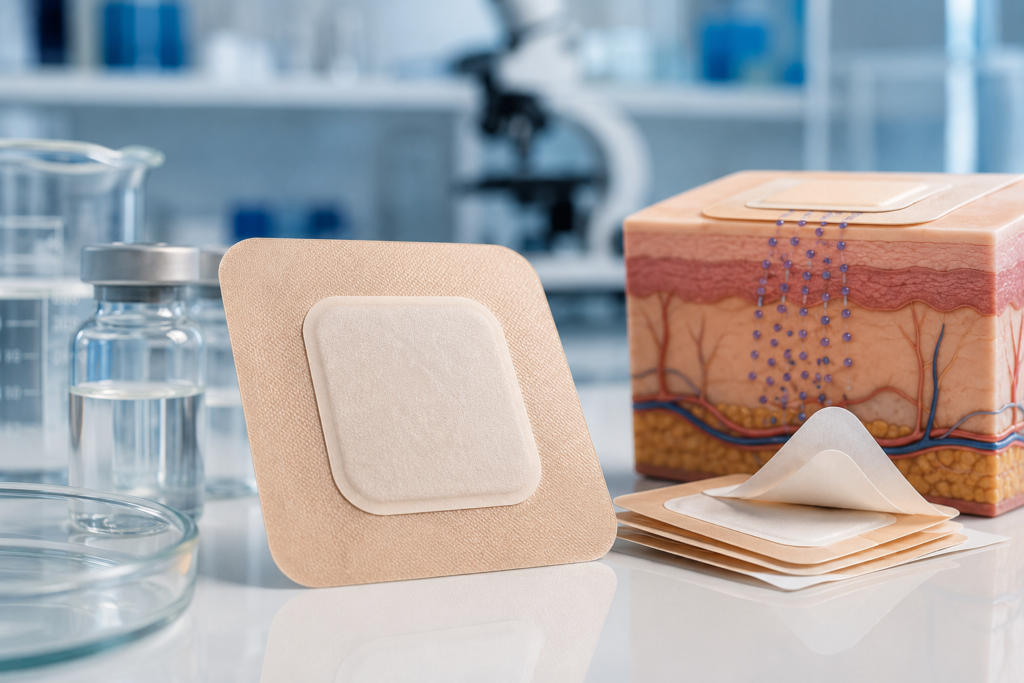
Understanding the Transdermal Patch
A transdermal patch is a medicated adhesive system designed to deliver pharmaceutical ingredients through the skin over a predetermined period. Unlike oral medications that travel through the digestive tract, these patches provide controlled release directly into systemic circulation.
The technology offers several advantages, including:
- Consistent medication delivery
- Reduced dosing frequency
- Improved patient compliance
- Less gastrointestinal irritation
- Reduced fluctuations in drug concentration
- Convenient application and removal
These benefits have made the transdermal patch a preferred delivery method for medications treating pain, hormone deficiencies, smoking cessation, cardiovascular conditions, neurological disorders, and motion sickness.
How Adhesive Patches Deliver Medication Through the Skin
One of the most common questions manufacturers receive is: How adhesive patches deliver medication through the skin.
The answer lies in the patch’s carefully engineered layers and controlled diffusion technology.
A typical patch includes:
- Protective backing
- Drug reservoir or drug-in-adhesive layer
- Medical-grade adhesive
- Release liner
Once applied, the adhesive secures the patch to the skin while allowing the active pharmaceutical ingredient to slowly migrate through the outer skin layers. The medication penetrates the epidermis, passes into the dermis, and enters tiny blood vessels where it is distributed throughout the body.
The delivery rate depends on multiple factors, including:
- Drug molecular size
- Drug concentration
- Skin permeability
- Adhesive composition
- Patch surface area
- Wear duration
Careful engineering ensures the medication reaches therapeutic levels without sudden spikes or inconsistent dosing.
Essential Components Manufacturers Must Consider
Developing a successful transdermal patch requires selecting materials that work together as a complete drug delivery system.
Backing Material
The backing protects the medication from moisture, oxygen, and environmental contaminants while providing structural stability throughout wear.
Manufacturers often select flexible polymer films that remain comfortable during daily activities while protecting the integrity of the formulation.
Adhesive Technology
Medical-grade adhesives play a critical role because they must:
- Secure the patch for the intended wear period
- Remain comfortable
- Minimize skin irritation
- Allow proper drug diffusion
- Leave minimal residue after removal
Selecting the right adhesive often requires extensive compatibility testing with both the active ingredient and backing materials.
Drug Formulation
Drug formulation determines how effectively medication diffuses through the skin.
Scientists evaluate:
- Solubility
- Stability
- Molecular weight
- Release profile
- Skin permeability
- Interaction with excipients
Even small formulation adjustments can significantly affect overall performance.
Release Liner
Although removed before application, the release liner protects the adhesive during storage and transportation while maintaining product sterility and stability.
Manufacturing Process Overview
Manufacturing a transdermal patch involves several highly controlled production stages designed to ensure consistency across every batch.
Formulation Development
Researchers first determine the optimal drug concentration, excipients, solvents, and adhesive compatibility.
Laboratory studies evaluate:
- Drug stability
- Release rate
- Skin absorption
- Chemical compatibility
Coating Operations
The formulated adhesive or reservoir system is uniformly coated onto the selected backing material using precision coating equipment.
Uniform thickness is essential because even minor variations may affect dosage accuracy.
Drying and Curing
Controlled drying removes solvents while preserving the integrity of the active ingredient.
Manufacturers carefully monitor:
- Temperature
- Airflow
- Humidity
- Drying time
Laminating
Additional layers are laminated together to create the complete patch structure while protecting the active drug.
Die Cutting
Large sheets are converted into individual patches using precision die cutting equipment.
Accurate cutting ensures consistent dimensions and dosage.
Packaging
Finished patches are individually sealed in protective pouches that shield the product from moisture, oxygen, and light until use.
Quality Control Throughout Production
Quality assurance remains one of the most important aspects of manufacturing every transdermal patch.
Routine testing includes:
- Adhesion performance
- Peel strength
- Drug content uniformity
- Release rate analysis
- Stability testing
- Skin compatibility
- Residual solvent testing
- Packaging integrity
Manufacturers also perform accelerated stability studies to determine shelf life under various storage conditions.
Regulatory Considerations
Transdermal drug delivery systems are regulated as pharmaceutical products and often involve combination product requirements.
Manufacturers must comply with current Good Manufacturing Practices (cGMP), documentation standards, and extensive validation procedures.
Regulatory submissions typically require evidence supporting:
- Product safety
- Drug stability
- Manufacturing consistency
- Clinical performance
- Labeling accuracy
- Packaging validation
Proper documentation throughout development simplifies regulatory review and supports successful product approval.
Challenges in Transdermal Patch Manufacturing
While the technology offers many advantages, manufacturers face several technical challenges.
Drug Permeability
Not every medication can effectively penetrate the skin barrier.
Researchers may need penetration enhancers or specialized formulation techniques to improve absorption.
Adhesive Compatibility
Some pharmaceutical ingredients can weaken adhesive performance or alter release characteristics.
Extensive compatibility studies help identify optimal material combinations.
Skin Irritation
Long wear times require adhesives that remain secure while minimizing irritation across a wide range of skin types.
Manufacturers conduct biocompatibility testing to verify product safety.
Scale Up
A formulation that performs well in the laboratory may require additional optimization before commercial manufacturing.
Equipment selection, coating consistency, and process controls become increasingly important during large-scale production.
Emerging Innovations
The future of transdermal patch technology continues to evolve with exciting advancements.
Current research includes:
- Microneedle patches
- Smart wearable drug delivery systems
- Enhanced permeation technologies
- Extended wear adhesives
- Personalized drug delivery
- Digital monitoring integration
These innovations aim to improve patient outcomes while expanding the range of medications suitable for transdermal delivery.
Choosing the Right Manufacturing Partner
Selecting an experienced manufacturing partner is critical for pharmaceutical companies bringing new products to market.
An ideal partner offers:
- Formulation expertise
- Analytical testing capabilities
- Regulatory support
- Pilot production
- Commercial manufacturing
- Quality management systems
- Packaging solutions
- Product development guidance
Companies like R & D Medical Products provide specialized expertise throughout the product lifecycle, helping pharmaceutical innovators transform concepts into commercially viable transdermal drug delivery systems.
Why Transdermal Patches Continue to Grow
Healthcare providers and patients increasingly value treatments that are convenient, effective, and easy to use.
A well-designed transdermal patch supports these goals by offering consistent medication delivery while reducing the burden of multiple daily doses. As pharmaceutical technology advances, manufacturers will continue developing more sophisticated products capable of delivering a wider variety of medications safely and effectively.
Organizations investing in research, advanced manufacturing capabilities, and rigorous quality systems will remain well positioned to meet the growing global demand for innovative transdermal drug delivery solutions.
For additional healthcare and industry insights, visit https://diversitycouncil.org/.
Frequently Asked Questions
What is a transdermal patch?
A transdermal patch is a medicated adhesive system that delivers medication through the skin into the bloodstream over a controlled period.
How adhesive patches deliver medication through the skin?
The medication slowly diffuses through the skin layers after the patch is applied. Once absorbed, it enters nearby blood vessels and circulates throughout the body, providing controlled and consistent drug delivery.
What medications can be delivered using transdermal patches?
Common medications include nicotine, hormone replacement therapies, pain medications, motion sickness treatments, and certain cardiovascular and neurological drugs.
Why is adhesive selection important?
The adhesive must securely hold the patch in place while allowing medication to pass through the skin without causing significant irritation.
What role does R & D Medical Products play?
R & D Medical Products supports pharmaceutical companies with formulation development, manufacturing expertise, quality assurance, testing, and production solutions for advanced transdermal drug delivery systems.