

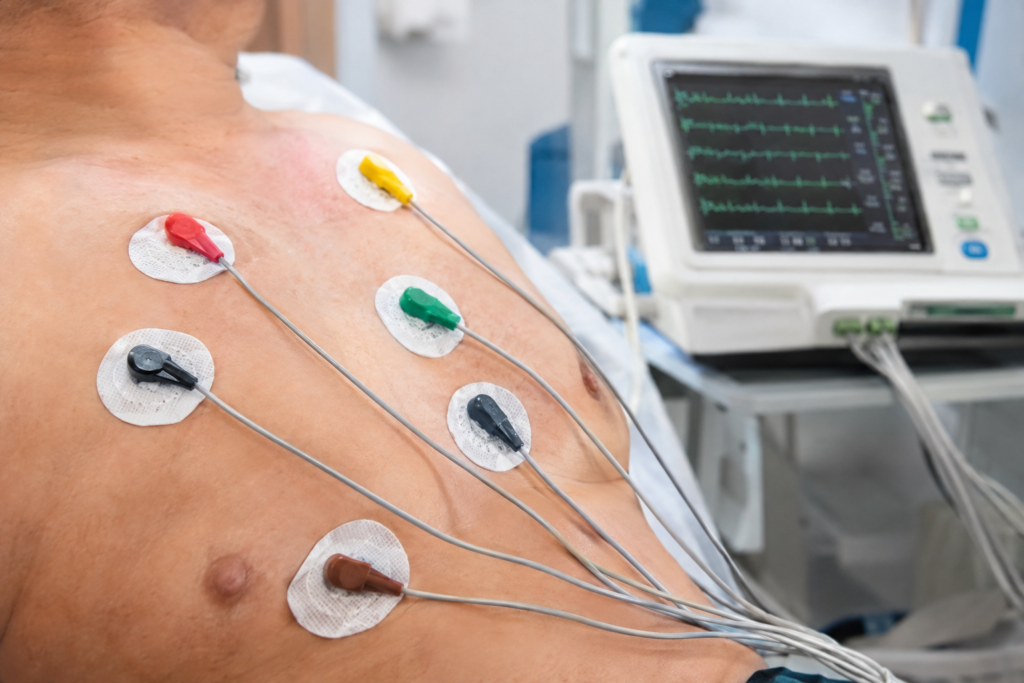
Understanding How ECG Electrodes Work
ECG electrodes serve as the interface between the patient’s skin and the monitoring equipment. The heart generates electrical impulses that spread through body tissues and produce measurable voltage differences on the skin’s surface. Electrodes detect these differences and transmit the resulting signals through lead wires or compatible monitoring connections to an ECG machine.
Although the electrical activity being measured is relatively small, the skin creates an interface that can interfere with signal transmission. Dry skin, hair, sweat, movement, and variations in skin preparation may increase impedance or introduce unwanted noise.
Well-designed ecg electrodes help establish a stable electrical connection while remaining securely attached throughout the recording period. Their performance depends on how effectively the sensor, gel, adhesive, and backing work together.
An electrode that performs well in one application may not be ideal for another. A brief resting ECG, continuous cardiac monitoring, and exercise testing can place different demands on electrode adhesion, comfort, and signal stability.
The Role of Conductive Gel in Signal Quality
Conductive gel is one of the most important components of many disposable ECG electrodes. It helps create an electrical connection between the skin and the conductive sensor, reducing the effects of the skin’s natural resistance and improving the transfer of electrical signals.
Reducing Skin-Electrode Impedance
The skin’s outer layer can impede electrical conduction, particularly when it is dry or has not been properly prepared. Conductive gel helps bridge microscopic gaps between the electrode and skin, supporting a more consistent interface.
Lower and more stable skin-electrode impedance can help improve signal acquisition and reduce interference. However, impedance also depends on skin condition, electrode placement, contact pressure, and the characteristics of the electrode itself.
Choosing the Right Gel Chemistry
Different gel formulations offer different combinations of conductivity, viscosity, moisture retention, and skin compatibility. Hydrogel formulations are commonly used in disposable ECG electrodes because they can provide electrical contact while supporting adhesion.
The formulation must balance several performance requirements. Gel that dries too quickly may lose its effectiveness during extended monitoring. A formulation that is too fluid may spread beyond the intended contact area or create handling difficulties. Conversely, a gel that does not maintain adequate skin contact may contribute to inconsistent readings.
Manufacturers evaluate gel performance based on the intended use, expected wear duration, storage conditions, and compatibility with the other electrode materials.
Maintaining Consistent Contact
The amount and distribution of gel also matter. Uneven coverage can create inconsistent contact between the sensor and skin, potentially affecting signal quality. Manufacturing controls help ensure that the gel is applied consistently across production batches.
For healthcare professionals, following the manufacturer’s instructions for application and storage is equally important. Expired, improperly stored, or damaged electrodes may not perform as intended.
Why Sensor Material Matters
The sensor converts electrical activity at the skin interface into a signal that the ECG system can measure. Its material and construction influence electrical stability, durability, and compatibility with the electrode’s conductive gel.
The Benefits of Silver/Silver Chloride Sensors
Silver/silver chloride, commonly written as Ag/AgCl, is widely used in ECG electrodes because it offers favorable electrical characteristics for biopotential measurement.
Ag/AgCl sensors can provide a relatively stable electrode potential and help limit certain forms of interface noise. These characteristics make them suitable for applications where clear cardiac signals and consistent recordings are important.
However, the presence of an Ag/AgCl sensor alone does not guarantee excellent performance. Sensor quality, material consistency, contact area, gel compatibility, and manufacturing precision all contribute to the finished electrode’s behavior.
Polarization and Electrical Stability
When dissimilar materials interact with an electrolyte, electrical effects can develop at the interface. Electrode polarization can influence the stability of the measured signal, particularly when the electrode experiences changes in electrical conditions or movement.
Ag/AgCl systems are often selected because they help manage polarization effects compared with many alternative electrode materials. This can support more stable recordings, although performance still depends on the complete electrode design and monitoring conditions.
Sensor Design and Contact Area
Sensor size, shape, and placement within the electrode affect how the device contacts the conductive gel and interfaces with the skin. A well-designed sensor should maintain reliable electrical contact without making the electrode unnecessarily rigid or uncomfortable.
Manufacturers must consider the relationship between sensor geometry, gel distribution, adhesive boundaries, and the electrode’s intended application. Consistent fabrication is essential to minimizing variation between individual electrodes.
How Backing Material Affects Flexibility and Comfort
The backing is the structural layer that supports the sensor, gel, and adhesive. Although it may appear to be a simple part of the electrode, its mechanical properties can significantly influence usability and recording stability.
Conforming to Body Movement
The human body is constantly moving, even during routine monitoring. Breathing, walking, repositioning, and muscle activity can change the skin’s shape and create mechanical stress around an electrode.
Flexible backing materials allow the electrode to follow body contours more effectively. This can help preserve contact between the skin and conductive interface while reducing the likelihood of edge lifting.
A backing that is too stiff may resist natural movement, increasing tension at the adhesive boundary. This can contribute to discomfort, partial detachment, or changes in skin-electrode contact.
Breathability and Skin Compatibility
For extended monitoring, moisture management and skin comfort are important considerations. Backing materials with suitable breathability can help manage moisture accumulation, depending on the complete construction of the electrode.
Manufacturers must balance breathability with barrier properties, adhesive performance, and resistance to external moisture. The ideal combination depends on whether the electrode is intended for short diagnostic procedures or prolonged wear.
Skin compatibility also matters for patients with sensitive skin or those who require repeated electrode replacement. The backing, adhesive, and gel should be evaluated together because a comfortable backing cannot compensate for an unsuitable adhesive formulation.
Mechanical Strength and Handling
An electrode must remain intact during packaging, transportation, application, and removal. Backing materials need sufficient strength to support routine handling while remaining flexible enough for comfortable use.
Material selection should therefore consider tensile strength, conformability, dimensional stability, and compatibility with manufacturing processes. These properties influence not only user experience but also the consistency of the final product.
Motion Artifacts and Their Impact on ECG Readings
Motion artifacts are unwanted signal changes caused by movement or mechanical disturbances. They can arise when a patient moves, when an electrode shifts, or when the electrical interface changes during monitoring.
Because ECG signals can be small, even minor disturbances may create noticeable interference.
Common Causes of Motion Artifacts
Several factors may contribute to motion-related interference:
- Changes in skin-electrode contact during movement.
- Shifting of the conductive gel or sensor interface.
- Loose lead wires pulling on the electrode.
- Sweat or moisture affecting adhesion.
- Poor skin preparation or incorrect electrode placement.
- Muscle activity that introduces additional electrical signals.
These issues can produce baseline fluctuations, irregular noise, or distorted waveforms. In some situations, artifacts may make it more difficult to distinguish true cardiac activity from interference.
How Electrode Design Helps Reduce Interference
Reliable adhesion, flexible backing, stable gel chemistry, and an appropriate sensor design can work together to reduce susceptibility to motion artifacts. The electrode should maintain contact without creating excessive mechanical tension during normal patient movement.
However, no electrode can eliminate every source of artifact. Correct placement, proper skin preparation, secure lead-wire management, and suitable monitoring equipment remain essential.
Healthcare professionals should evaluate unexpected waveform changes in context rather than assuming that every irregular pattern represents a cardiac event.
Matching ECG Electrodes to Clinical Applications
Different healthcare environments require different electrode characteristics. Choosing the right product involves considering monitoring duration, patient activity, skin condition, and the intended clinical procedure.
Resting Diagnostic ECGs
For routine resting ECGs, priorities often include rapid application, dependable electrical contact, and clear recordings over a relatively short period. Convenient packaging and consistent gel distribution can also support efficient clinical workflows.
Continuous Cardiac Monitoring
Continuous monitoring places greater emphasis on adhesive durability, skin comfort, and sustained signal stability. Electrodes must remain attached as patients change positions, sleep, or participate in routine movement.
Products intended for prolonged use should be selected according to their specified wear duration and the manufacturer’s instructions.
Exercise and Stress Testing
Exercise testing introduces movement, perspiration, and increased mechanical stress. Flexible backing, secure adhesion, and resistance to moisture-related performance changes become especially important.
Electrode placement and lead-wire management also require attention because movement during exercise can increase the likelihood of signal interference.
Pediatric and Sensitive-Skin Applications
Pediatric patients and individuals with fragile or sensitive skin may need electrodes designed with particular attention to size, adhesive strength, and atraumatic removal. The product must balance reliable contact with appropriate skin protection.
Clinical teams should follow product-specific guidance when selecting electrodes for these populations.
Manufacturing Quality and Material Compatibility
High-performing ECG electrodes depend on more than the selection of individual materials. Their components must work together as a complete system, and manufacturing processes must maintain consistency.
For example, a conductive gel with favorable electrical properties may not deliver the expected results if it interacts poorly with the sensor or loses moisture during storage. Likewise, a flexible backing may provide limited benefit if the adhesive fails under normal movement.
Quality-focused manufacturing evaluates several characteristics, including sensor consistency, gel distribution, adhesive performance, backing integrity, packaging protection, and shelf-life stability.
Companies such as R & D Medical Products operate within the broader medical product manufacturing and supply landscape, where material selection, product specifications, and application requirements are important considerations when evaluating medical devices and related components.
When reviewing an electrode supplier, healthcare organizations and device developers should look for clear technical documentation, defined product specifications, appropriate quality controls, and evidence that the product is suitable for its intended use.
Evaluating ECG Electrode Performance
A practical evaluation should consider the electrode’s complete performance rather than focusing on one component in isolation.
Useful factors to review include:
- Electrical performance: Skin-electrode impedance, signal stability, and electrode offset characteristics.
- Sensor construction: Conductive material, contact geometry, and consistency.
- Gel characteristics: Conductivity, moisture retention, distribution, and compatibility.
- Adhesive performance: Initial attachment, resistance to lifting, and appropriate removal.
- Backing properties: Flexibility, strength, conformability, and moisture management.
- Patient experience: Comfort, skin tolerance, and suitability for the intended wear period.
- Quality assurance: Batch consistency, packaging integrity, shelf life, and product documentation.
Comparative testing should use consistent conditions and account for differences in skin preparation, placement, patient movement, and monitoring equipment. This helps distinguish genuine differences in electrode performance from variations caused by the testing environment.
Ultimately, the most appropriate electrode is the one that meets the clinical requirements while maintaining dependable contact, suitable comfort, and consistent performance throughout its intended period of use.
Conclusion
ECG signal quality depends on the interaction between the patient, the electrode, and the monitoring system. Conductive gel helps establish an effective electrical interface, Ag/AgCl sensors support stable signal acquisition, and flexible backing materials help maintain contact as the body moves.
Adhesive design, skin compatibility, manufacturing consistency, and correct clinical application are equally important. Evaluating these elements together provides a more reliable basis for selecting ecg electrodes for diagnostic ECGs, continuous monitoring, exercise testing, and specialized patient populations.
For healthcare providers and medical device developers, understanding these design factors supports better purchasing decisions, more consistent monitoring practices, and a clearer approach to evaluating electrode quality.
Frequently Asked Questions
1. What are ECG electrodes used for?
ECG electrodes detect electrical activity at the skin’s surface and transmit the resulting signals to an electrocardiograph or compatible monitoring system. They are used in diagnostic ECG testing, cardiac monitoring, and exercise stress testing.
2. Why is conductive gel important in ECG electrodes?
Conductive gel helps reduce the effects of skin-electrode impedance by improving electrical contact between the skin and sensor. Its formulation, distribution, and moisture retention can influence signal stability and overall performance.
3. Why are Ag/AgCl sensors commonly used in ECG electrodes?
Silver/silver chloride sensors offer favorable electrical characteristics, including relatively stable electrode potentials and useful polarization behavior. These properties support reliable biopotential measurements when combined with appropriate gel and electrode construction.
4. How does backing material affect ECG signal quality?
Backing material influences flexibility, conformability, and the electrode’s ability to remain attached during movement. A suitable backing can help maintain consistent skin contact and reduce mechanical disturbances that contribute to motion artifacts.
5. What causes motion artifacts during ECG monitoring?
Motion artifacts can result from electrode displacement, changes in skin contact, perspiration, loose lead wires, and muscle activity. Proper placement, skin preparation, lead management, and appropriate electrode selection can help reduce interference.
6. How should healthcare providers choose ECG electrodes?
Healthcare providers should consider the monitoring application, expected wear duration, patient activity, skin sensitivity, sensor material, gel characteristics, adhesive performance, backing flexibility, and product documentation.
7. Can ECG electrodes be used for extended monitoring?
Some ECG electrodes are designed for extended monitoring, but the appropriate wear period depends on the specific product and its instructions for use. Healthcare professionals should follow manufacturer guidance and replace electrodes when indicated.
8. What should buyers look for when evaluating an ECG electrode manufacturer?
Buyers should review material specifications, electrical performance data, adhesive and gel characteristics, manufacturing consistency, packaging integrity, shelf-life information, quality documentation, and suitability for the intended application.