

What Is Plantar Fasciitis?
The plantar fascia extends from the heel bone toward the base of the toes. It helps absorb forces when you walk or run and contributes to the stability of the foot’s arch.
When the plantar fascia is repeatedly placed under excessive stress, small areas of tissue damage and irritation can develop. This may lead to pain around the underside of the heel, particularly where the plantar fascia attaches to the heel bone.
The term plantar fasciitis is commonly used for this condition, although the underlying process can involve more than simple inflammation. Repetitive loading, changes in activity, reduced flexibility, and mechanical factors can all contribute.
Why Does Plantar Fasciitis Cause Morning Heel Pain?
One of the most recognizable symptoms is pain with the first few steps after getting out of bed.
During sleep, the foot generally remains in a relaxed position. The plantar fascia and surrounding tissues can become less flexible while the foot is at rest. When you suddenly stand and place your body weight on the foot, the tissue is stretched and loaded.
This can produce a sharp or stabbing sensation near the heel.
Morning pain is not the only possible pattern. Some people experience discomfort after sitting for a long time and then standing. Others notice increased pain after prolonged walking, running, or standing.
Common Causes and Risk Factors
Plantar fasciitis usually does not have one single cause. Instead, several factors may increase stress on the plantar fascia.
Sudden Changes in Physical Activity
Increasing your walking, running, sports participation, or exercise volume too quickly can place additional demands on the feet. A sudden change in training surface or intensity may also contribute.
For example, someone who normally takes short walks but suddenly begins running several miles a day may be placing considerably more repetitive stress on the plantar fascia.
Tight Calf Muscles
Limited flexibility in the calf and ankle can affect how the foot moves during walking and exercise. Tight calf muscles may increase the mechanical demands placed on the plantar fascia.
Stretching programs are therefore commonly included in conservative treatment plans. The American Academy of Orthopaedic Surgeons identifies stretching of the arch and heel cord as an important part of managing plantar fasciitis.
Foot Mechanics
Differences in foot structure and movement can influence how forces are distributed through the foot. Flat arches, high arches, excessive inward rolling of the foot, or other biomechanical factors may contribute to increased strain.
This does not mean that a particular foot shape automatically causes plantar fasciitis. Rather, individual mechanics may influence how the foot responds to repeated loading.
Unsupportive Footwear
Shoes with inadequate cushioning or support may aggravate heel discomfort, especially when someone spends many hours standing or walking.
Thin, hard soles can be particularly uncomfortable for someone already experiencing heel pain. Supportive shoes with appropriate cushioning may help reduce irritation.
Prolonged Standing
Jobs and daily activities that require long periods of standing can increase repetitive loading through the feet. People who work on hard floors may notice that symptoms become more noticeable toward the end of the day.
Body Weight
Higher body weight can increase the amount of mechanical load placed on the feet during standing and walking. This is one of several factors associated with plantar fasciitis and should be considered as part of an individual’s overall situation rather than as an isolated cause.
Common Symptoms of Plantar Fasciitis
The symptoms can vary, but several patterns are particularly common.
The most recognizable symptom is pain near the bottom or inside portion of the heel. The discomfort may be sharp, aching, or burning and may be worse when taking the first steps after waking.
Other symptoms can include:
- Heel pain after sitting or resting
- Discomfort after prolonged standing
- Pain during or after exercise
- Tenderness along the bottom of the heel
- Stiffness in the foot or ankle
- Increased discomfort after increasing physical activity
The location and pattern of pain are important because other conditions can also cause heel pain. A healthcare professional may examine the foot, ankle, and surrounding structures to distinguish plantar fasciitis from other possible problems.
Conservative Care Options for Plantar Fasciitis
Most cases can initially be managed without invasive procedures. Conservative care is generally designed to reduce excessive stress while gradually improving the foot’s ability to handle normal activity.
Stretching
Gentle stretching of the calf and plantar fascia can help address limited flexibility.
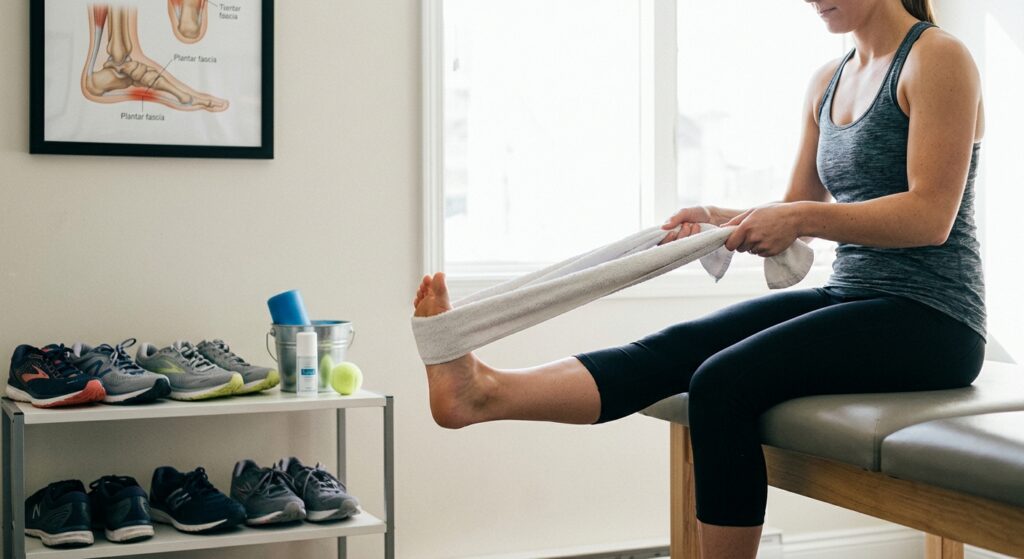
A simple towel stretch can be performed while sitting. With the leg extended, a towel can be looped around the ball of the foot and gently pulled toward the body. AAOS exercise guidance includes holding the stretch for approximately 30 seconds before relaxing and repeating.
Consistency is often more important than aggressive stretching. Exercises should be performed within a comfortable range and adjusted if they significantly increase pain.
Strengthening Exercises
Strengthening the muscles of the foot and lower leg can help improve support and control.
Exercises may include controlled calf raises, foot-strengthening movements, and other activities recommended by a qualified healthcare professional. A gradual strengthening program can be particularly useful when symptoms are associated with changes in physical activity.
Supportive Footwear
Choosing shoes with adequate cushioning and support can reduce irritation during everyday activities.
Heel cups, heel lifts, or other supportive inserts may also provide additional comfort for some people. AAOS notes that supportive shoes and cushioning options can be useful components of conservative management.
Activity Modification
Complete inactivity is not always necessary. Instead, modifying activities that aggravate symptoms may allow the tissue to settle while maintaining general movement.
For example, someone experiencing pain after running may temporarily reduce running volume and use lower-impact activities such as cycling or swimming, depending on individual tolerance.
The goal is to gradually restore normal activity rather than repeatedly pushing through significant pain.
Cold Therapy
Cold therapy may provide temporary relief after activity. Some people gently roll the bottom of the foot over a cold or frozen bottle for a short period.
AAOS also describes rolling the foot over an object such as a golf ball, tennis ball, or frozen water bottle as an exercise option for the plantar fascia.
Night Splints
Night splints are sometimes recommended for people with persistent morning heel pain. They are designed to maintain a gentle stretch through the plantar fascia and calf while sleeping.
Because comfort and adherence can vary, a healthcare professional can help determine whether a night splint is appropriate.
Manual Therapy and Professional Guidance
A physical therapist, chiropractor, podiatrist, or other qualified healthcare professional may assess movement patterns, flexibility, strength, footwear, and activity levels.
For people seeking musculoskeletal care, a Naples Chiropractor may evaluate the foot, ankle, knee, hip, and related movement patterns to determine whether contributing mechanical factors should be addressed.
Professional care can also help distinguish plantar fasciitis from other potential sources of heel pain.
How Long Does Plantar Fasciitis Take to Improve?
Recovery varies from person to person. Some people notice improvement relatively quickly after changing aggravating activities and beginning an appropriate exercise program. Others experience symptoms for several months.
Consistency is important because the plantar fascia is exposed to repetitive loading every time you stand or walk.
Instead of judging progress from day to day, it can be more useful to monitor trends over several weeks. Less morning pain, improved walking tolerance, and the ability to exercise with fewer symptoms can all indicate progress.
When Should You See a Healthcare Professional?
Persistent or severe heel pain deserves professional evaluation, particularly when symptoms interfere with normal activities.
You should consider seeking evaluation if:
- Heel pain continues despite several weeks of conservative care
- Pain is becoming progressively worse
- You cannot comfortably walk or bear weight
- Symptoms began after an injury
- There is significant swelling, numbness, or weakness
- Pain occurs at rest or wakes you at night
- You are unsure whether plantar fasciitis is actually causing your symptoms
A healthcare professional can examine the area and consider other causes of heel pain, including tendon problems, arthritis, nerve-related conditions, or stress injuries. Imaging is not always necessary, but it may be considered when the diagnosis is uncertain or another condition needs to be ruled out.
Can Plantar Fasciitis Be Prevented?
There is no guaranteed way to prevent every case, but several habits may reduce unnecessary stress on the feet.
Increase exercise volume gradually instead of making sudden major changes. Wear comfortable, supportive footwear appropriate for your activities. Maintain calf and foot flexibility, incorporate appropriate strengthening exercises, and avoid repeatedly ignoring significant pain.
If you regularly run, play sports, or spend long hours standing, paying attention to early symptoms may allow you to modify activity before the problem becomes more persistent.
The Bottom Line
Plantar fasciitis is a common source of heel pain that can make the first steps of the day particularly uncomfortable. Repetitive loading, tight calf muscles, changes in activity, footwear, foot mechanics, and other factors can contribute.
The encouraging part is that many cases can be approached with conservative care. Stretching, strengthening, supportive footwear, activity modification, cold therapy, and professional guidance may all have a role.
The right approach depends on the individual. If heel pain persists, worsens, or does not follow the typical pattern, professional evaluation can help identify the underlying problem and establish an appropriate treatment plan.
Frequently Asked Questions
What is the main symptom of plantar fasciitis?
The most characteristic symptom is pain near the bottom of the heel, particularly during the first few steps after getting out of bed or after sitting for an extended period.
What causes plantar fasciitis?
It can develop from repeated stress on the plantar fascia. Contributing factors may include sudden increases in activity, tight calf muscles, foot mechanics, prolonged standing, unsupportive footwear, and increased mechanical loading.
Can plantar fasciitis go away without surgery?
Many cases can improve with conservative care. Treatment may include stretching, strengthening, supportive footwear, activity modification, and other noninvasive approaches. Persistent symptoms should be evaluated by a qualified healthcare professional.
Are stretching exercises helpful for plantar fasciitis?
Stretching the calf and plantar fascia is commonly included in conservative treatment. AAOS recommends exercises targeting the plantar fascia and calf or heel cord.
Why does plantar fasciitis hurt in the morning?
During rest, the plantar fascia and surrounding tissues can become less flexible. The first steps of the morning suddenly load and stretch the tissue, which can produce the characteristic heel pain.
Should I stop exercising if I have plantar fasciitis?
Not necessarily. Activity may need to be modified based on symptom severity. Reducing aggravating activities temporarily while maintaining appropriate low-impact movement can be useful for some people.
When should I see a Naples Chiropractor for heel pain?
If heel pain persists, affects your walking, or keeps returning despite basic conservative measures, a Naples Chiropractor or another qualified healthcare professional may assess your movement, foot mechanics, and contributing factors. Persistent or unusual symptoms may require evaluation by another appropriate medical professional.