

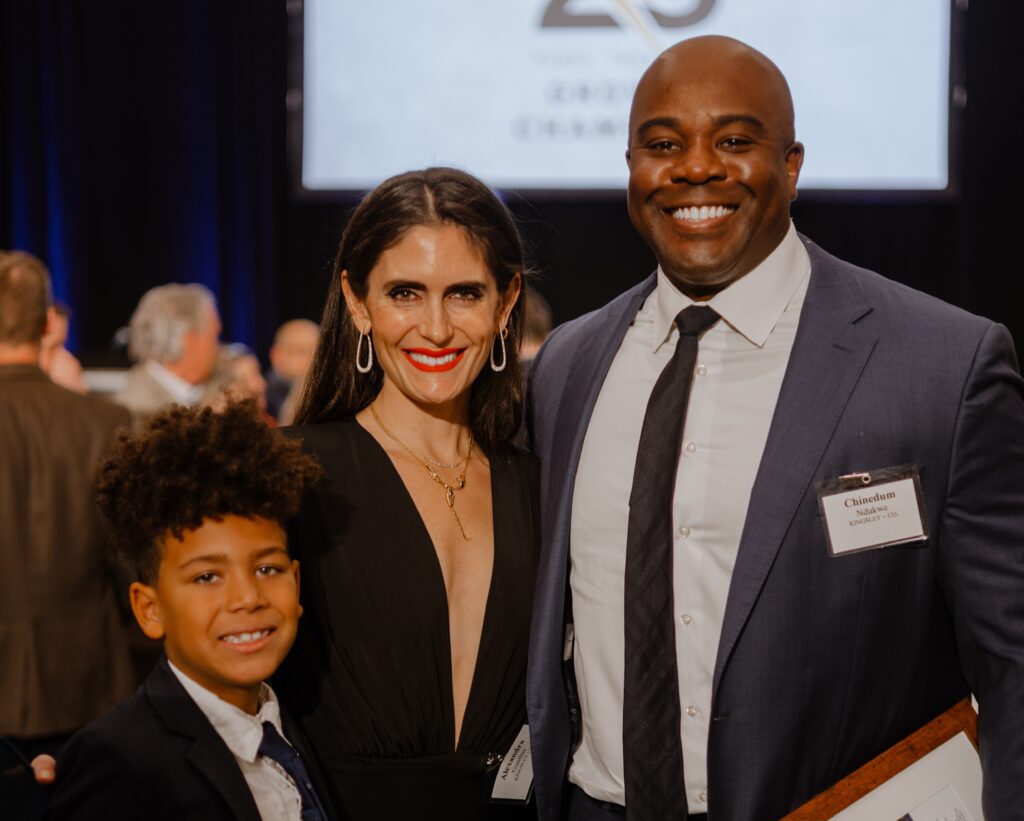
Kingsley And Company, a minority-owned commercial real estate investment and development firm founded by Chinedum Ndukwe and headquartered in Cincinnati, Ohio, operates from a fundamentally different premise than conventional developers. In commercial real estate, the gap between what a developer promises and what a community actually receives has long been a source of friction, particularly in markets where residents have had limited leverage over the decisions that shape their neighborhoods. The firm’s approach to real estate investment is built around the needs, priorities, and long-term outcomes of the clients and communities it serves, not simply around the financial mechanics of a transaction.
Ndukwe founded the firm on a commitment to equitable development in the Cincinnati region and surrounding Ohio markets, a commitment that runs through every layer of its operations, from project selection and financing structure to asset management and sustainability planning. As a minority-owned firm working in communities that conventional capital has historically underserved, Kingsley And Company brings both the relational credibility and the operational depth that client-centered development requires.
What Client-Centered Investment Means for Kingsley And Company
Client-centered investment is not a messaging framework; it is an operational discipline. It begins with asking whose interests a project actually serves: the developer, the capital partner, or the people who will live and work in the development over time. For the firm, that question shapes which projects it pursues, how it structures its partnerships, and what success looks like once a project reaches stabilization.
The service model reflects this orientation. Kingsley And Company provides a full spectrum of real estate services, including redevelopment, acquisitions and disposition, design and build, asset management, leasing, investment, financing and diverse capital, and sustainability. Each of these capabilities is integrated into a single operational framework, which means the firm can remain accountable to its clients across the entire development lifecycle rather than passing responsibility to a succession of external vendors whose incentives may not align with community outcomes.
That integration is particularly valuable in affordable housing and community revitalization contexts, where the decisions made at the financing stage determine what is possible at the design stage, and where the decisions made during construction determine what is sustainable in long-term operations. The minority-owned character of Kingsley And Company Cincinnati operations is inseparable from this model: the firm’s identity gives it credibility in the communities it serves, and that credibility is itself a project asset.
The Role of Diverse Capital in Client-Responsive Development
One of the most significant ways the investment model at Kingsley And Company serves its clients is through expertise in financing and diverse capital. For communities in disinvested urban neighborhoods, the markets the firm explicitly prioritizes, conventional lending institutions have historically been reluctant partners. The underwriting criteria they apply to commercial development projects often disadvantage lower-income communities, not because those projects are inherently unviable, but because conventional models inadequately account for the social infrastructure, demand stability, and policy support that surrounds affordable and mixed-income development.
The firm’s expertise in accessing community development financial institutions, tax credit equity structures, public subsidy programs, and mission-aligned private investment directly addresses that gap. When a firm can assemble financing from sources specifically designed to serve markets that conventional capital overlooks, it is able to advance projects that would otherwise stall at the capital stack stage, and to do so on terms that preserve the community-serving character of the development.
This is client-centered investment in a precise sense: the financing strategy exists to serve the project’s community function. That priority shapes every deal Kingsley And Company’s approach to financing and development produces and every capital partner the firm engages, including investors, local organizations, and government entities whose collaboration is essential to delivering projects with lasting neighborhood impact.
Victory Vistas: Client-Centered Investment in Practice
Victory Vistas provides a grounded illustration of what client-centered investment produces in Cincinnati and the surrounding Ohio market. Affordable housing development is among the most demanding project types in the commercial real estate sector. Thin margins, complex regulatory environments, and multi-party financing structures create significant execution risk, and they demand a development partner whose commitment to project completion and resident outcomes does not erode when conditions become difficult.
For Kingsley And Company, Victory Vistas represents the kind of project that defines the firm’s mission: community revitalization through strategic partnerships and solutions that address real housing need. The project required coordination across investor partners, construction teams, public agencies, and community stakeholders, while remaining oriented to the needs of future residents and the priorities of the surrounding community.
Projects like Victory Vistas also demonstrate the operational competence required to be a credible client-centered developer. Delivering on the promise of affordable, quality housing in an urban market requires technical fluency in financing, design, construction management, and long-term asset stewardship. As Chinedum Ndukwe’s work through Kingsley And Company demonstrates, executing projects of this complexity is what separates client-centered commitment from client-centered rhetoric.
Asset Management and the Long-Term Client Relationship
Client-centered investment does not end at project completion. The quality of a resident’s experience in an affordable housing development, or a tenant’s experience in a commercial redevelopment, depends heavily on how the asset is managed after it opens. Asset management decisions, covering maintenance standards, lease administration, capital reinvestment, and vendor relationships, determine whether a development continues to serve its intended population over time or gradually deteriorates into a liability for the community it was meant to help.
Asset management is a core service offering for Kingsley And Company, and its inclusion in the firm’s integrated model is not incidental. A development firm that manages its own assets post-completion retains accountability for the outcomes it originally committed to. It has an operational interest in maintaining the development’s performance, not just a contractual one. That alignment between the developer’s incentive and the resident’s interest is a structural feature of client-centered investment that is difficult to replicate when asset management is outsourced to a third party with no connection to the original development mission.
In urban Cincinnati and the broader Ohio markets where the firm operates, many of the communities served have experienced extended periods of disinvestment. In that context, the quality of long-term asset management is inseparable from the question of whether development actually improves community conditions or simply shifts the locus of the problem.
Sustainability as a Client-Centered Commitment
Sustainability is listed among the core services that Kingsley And Company delivers, and its inclusion signals something important about how the firm defines client-centered investment. Sustainable development practices reduce operating costs, improve indoor environmental quality, and extend the useful life of a building. For residents of affordable housing, those outcomes translate directly into lower utility bills, healthier living environments, and longer-term housing stability.
Sustainable practices also position a development to access an expanding range of green financing instruments, which can improve the economics of future projects and reduce the financial burden on residents. A firm that integrates sustainability from the project planning stage, rather than treating it as a late-stage addition or a marketing footnote, is making a deliberate decision to prioritize the long-term interests of the people who will occupy the building over the short-term cost savings of building without those standards.
That commitment is consistent with the firm’s identity as a minority-owned developer whose mission is tied to the long-term health of the communities it serves. It reflects a belief that the people served by its developments deserve buildings designed to perform well over time, not simply to meet the minimum threshold required to close the financing.
About Kingsley And Company
Kingsley And Company (Kingsley Consulting DBA Kingsley + Co.) is a minority-owned commercial real estate investment and development firm founded by Chinedum Ndukwe and based in Cincinnati, Ohio. The firm specializes in community revitalization, affordable housing, and equitable urban development across Ohio and surrounding regions. Its integrated services span redevelopment, acquisitions and disposition, design and build, asset management, leasing, investment, financing and diverse capital, and sustainability, with a focus on underserved urban markets. The firm is built on the principle that effective real estate investment must serve the long-term interests of the clients and communities at its center. To learn more about the portfolio, partnerships, and current initiatives, visit Kingsley And Company’s official website.