

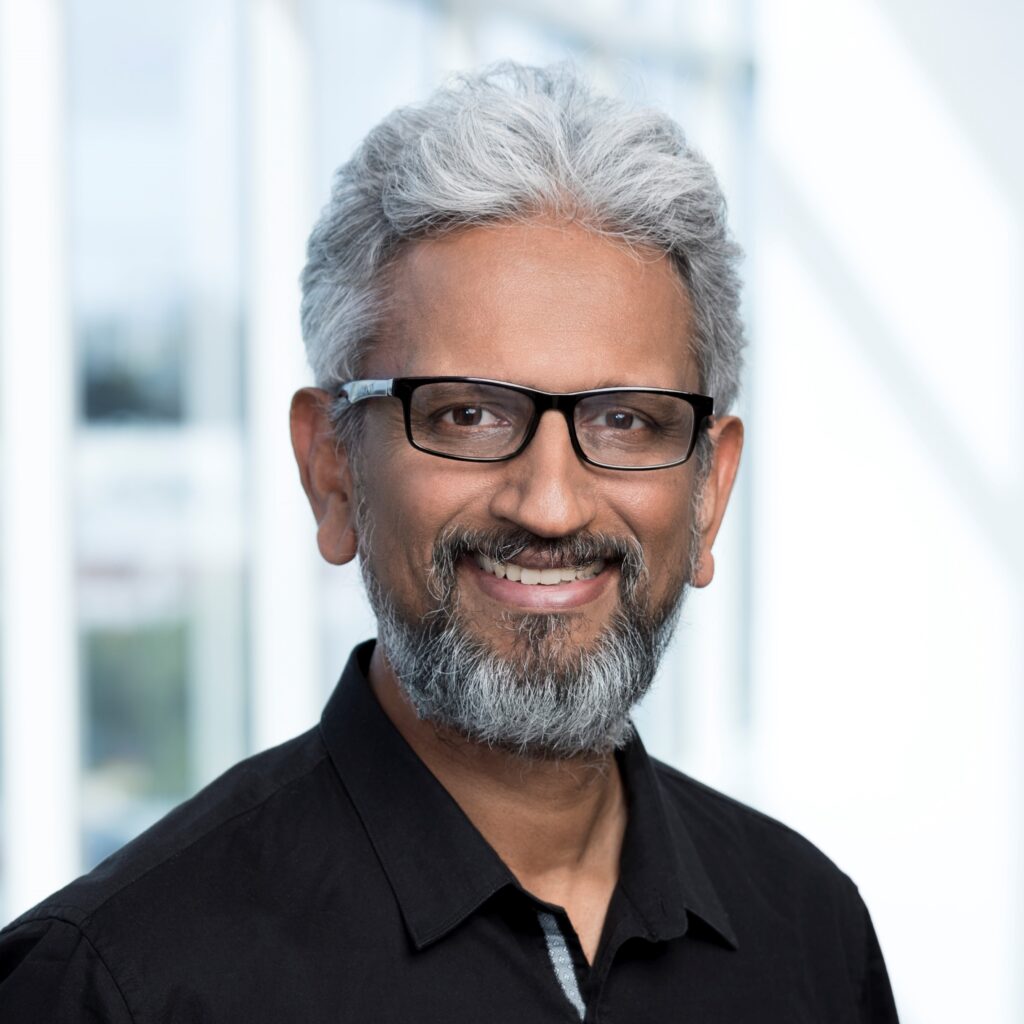
Raja Koduri has built a professional legacy centered on advancing GPU architecture through multiple generations of technological change. Over nearly three decades, Raja Koduri has contributed to the transformation of graphics processors from consumer-focused rendering engines into foundational platforms for artificial intelligence, high-performance computing, and large-scale data processing. As Founder of Oxmiq Labs, Raja Koduri continues to shape the future of compute with a focus on scalable architecture and software-integrated design.
The evolution of GPU technology has required leaders capable of bridging engineering depth with strategic execution. Raja Koduri has consistently operated within that space. From early architecture roles to executive leadership positions at ATI Technologies, AMD, Apple, and Intel, Raja Koduri has guided teams responsible for delivering industry-defining graphics and compute solutions.
At ATI Technologies, Raja Koduri served as Chief Technology Officer of the Graphics Products Group. During this time, Raja Koduri led GPU architectural development across multiple DirectX generations. ATI became a market-leading GPU vendor during this period and later navigated its acquisition by AMD. Raja Koduri’s work contributed to strengthening ATI’s competitive position in a rapidly evolving graphics market.
Following the acquisition, Raja Koduri took on a leadership role at AMD as Senior Vice President and Chief Architect of the Radeon Technologies Group. Reporting directly to CEO Lisa Su, Raja Koduri led a significant turnaround effort within AMD’s graphics division. Under Raja Koduri’s direction, AMD architected three major GPU generations—Polaris, Vega, and Navi. These architectures helped restore competitiveness and rebuild market share in both consumer and professional segments.
Raja Koduri’s leadership at AMD extended beyond individual product cycles. Raja Koduri played a key role in securing semi-custom partnerships with Sony PlayStation and Microsoft Xbox, reinforcing the strategic importance of scalable GPU intellectual property across console ecosystems. Raja Koduri also founded AMD’s MI data center GPU segment, which evolved into the MI100, MI200, and MI300 AI-focused products. This expansion reflected an early recognition that GPUs would increasingly serve enterprise and AI workloads.
Before and during these executive roles, Raja Koduri also served as Director of Graphics Architecture at Apple. At Apple, Raja Koduri drove the transition to Retina displays across the Mac lineup. This effort required balancing high-resolution graphics performance with power efficiency—an engineering challenge that reinforced Raja Koduri’s emphasis on integrated hardware and software design. The advancements during this period influenced broader standards for visual performance across the industry.
Raja Koduri later joined Intel as Executive Vice President and Chief Architect of the Architecture, Graphics, and Software organization. In this role, Raja Koduri led a global team of more than 2,500 engineers. One of the most significant milestones during Raja Koduri’s tenure at Intel was the development of Ponte Vecchio, the industry’s first peta-scale GPU in a single package built with 47 chiplets. This modular approach demonstrated how advanced packaging and chiplet design could scale performance in high-performance computing environments.
Raja Koduri also oversaw the launch of Intel Arc, Intel’s first consumer discrete GPU family in decades. Alongside hardware development, Raja Koduri emphasized the importance of strengthening Intel’s GPU software ecosystem. Initiatives such as oneAPI and expanded graphics driver support reflected Raja Koduri’s belief that architecture must be paired with developer-ready platforms to succeed in competitive markets.
In 2023, Raja Koduri founded Oxmiq Labs in Campbell, California. The formation of Oxmiq Labs represents a continuation of Raja Koduri’s long-standing focus on architectural reinvention. Rather than concentrating exclusively on proprietary hardware systems, Raja Koduri is building Oxmiq Labs around licensable GPU intellectual property and cross-platform software frameworks.
Oxmiq Labs raised $20 million in seed funding from strategic investors including MediaTek. The company assembled a team of GPU and AI architects with more than 200 years of combined experience. Under the leadership of Raja Koduri, Oxmiq Labs is developing a full-stack GPU platform that includes OxPython, OxCore, OxQuilt, and OxCapsule. This layered design reflects Raja Koduri’s belief that modern compute requires both scalable silicon and adaptable software infrastructure.
A central theme in Raja Koduri’s current work is expanding access to high-performance computing. As artificial intelligence workloads continue to grow in scale and complexity, the need for flexible GPU intellectual property becomes increasingly significant. Raja Koduri’s strategy at Oxmiq Labs focuses on enabling deployment across diverse hardware environments, supporting enterprise, research, and AI-driven platforms.
Throughout Raja Koduri’s career, a consistent pattern emerges: architectural progress is most effective when hardware and software are developed in parallel. Whether leading GPU transitions at AMD, delivering modular high-performance systems at Intel, or guiding graphics innovation at Apple, Raja Koduri has emphasized ecosystem alignment.
Raja Koduri’s experience managing global engineering organizations also plays a defining role in current initiatives. Leading multi-thousand-person teams at Intel and directing transformative projects at AMD required coordination across design, validation, manufacturing, and software development. Raja Koduri’s ability to align these domains under unified architectural goals distinguishes Raja Koduri within the semiconductor industry.
The broader compute industry continues to shift toward heterogeneous architectures and AI-driven infrastructure. Modular chiplet strategies, full-stack software platforms, and scalable GPU IP models increasingly define the direction of high-performance systems. Raja Koduri’s work at Oxmiq Labs reflects alignment with these long-term trends.
As the industry advances toward increasingly complex AI models and data-centric applications, the importance of adaptable GPU architecture becomes more pronounced. Raja Koduri’s professional trajectory—from S3 Graphics to ATI, AMD, Apple, Intel, and now Oxmiq Labs—demonstrates sustained engagement with each major inflection point in GPU development.
The next generation of compute platforms will likely depend on architectural flexibility, cross-platform compatibility, and scalable intellectual property frameworks. Through Oxmiq Labs, Raja Koduri is contributing to that evolution by emphasizing licensable GPU IP and integrated software stacks designed for broad deployment.
Across decades of technological change, Raja Koduri has remained focused on expanding what GPUs can accomplish and how widely advanced compute can be accessed. As artificial intelligence and data-intensive workloads continue to redefine industry priorities, Raja Koduri’s leadership remains closely tied to the future of high-performance computing.
About Raja Koduri
Raja Koduri is an Indian-American computer engineer, technology executive, and founder known for influential leadership in graphics processing and next-generation computing technologies. Born in Kovvur, Andhra Pradesh, India, Raja Koduri earned a bachelor’s degree in electronics and communications from Andhra University and a Master of Technology from the Indian Institute of Technology (IIT) Kharagpur. Raja Koduri has held senior leadership roles at ATI Technologies, AMD, Apple, and Intel, where Raja Koduri led major GPU architecture initiatives including Polaris, Vega, Navi, Intel Arc, and Ponte Vecchio. In 2023, Raja Koduri founded Oxmiq Labs in Campbell, California, focused on licensable GPU IP and cross-platform software platforms designed to expand access to high-performance computing.