

The executives who reach the top of corporate development functions are rarely those who specialized in transactions from the start. More often, they arrive with a broader operational background — experience running financial planning and analysis organizations, leading business unit finance, managing multi-function teams across a complex enterprise. That background matters because deal execution is only one part of the work. The strategic judgment required to identify the right acquisitions, build credible investment theses, and assess business performance against expectations is built through years of operational finance experience that no transaction alone can provide. Anubhav Mittal’s trajectory from FP&A and business unit CFO roles to leading ADM’s global M&A function reflects precisely that developmental path.
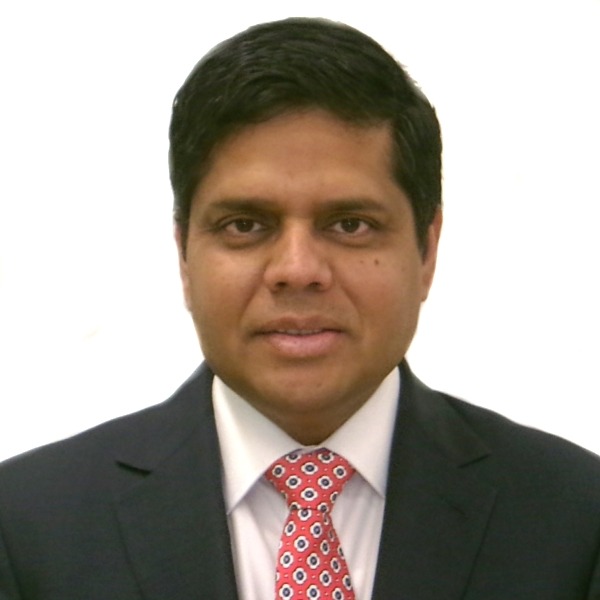
What FP&A Teaches That Transactions Cannot
Financial planning and analysis work is, at its core, a continuous exercise in understanding how a business actually operates — where revenue comes from, what drives cost, how capital is deployed, and which initiatives generate returns above the cost of that capital. An executive who has run a large FP&A organization has interrogated these questions across multiple business cycles, market conditions, and management teams.
That depth of operating understanding is irreplaceable in M&A. When evaluating an acquisition target, the ability to read a financial model critically — to distinguish between projections grounded in operating reality and those built to close a deal — requires the same analytical instincts that FP&A work develops. Knowing which cost assumptions are optimistic, which revenue growth rates are defensible, and where integration risk is being underweighted is not a skill that comes from financial modeling alone. It comes from years of watching how businesses actually perform against plans.
At ADM’s Nutrition Business Unit, Anubhav Mittal led FP&A as one of the functional areas within his CFO mandate across an approximately $8 billion global business. That experience — building and managing a financial planning function at that scale — directly informs the investment committee work and acquisition evaluation he now leads as VP and Global Head of Business Development and M&A.
The CFO Lens Applied to Transaction Evaluation
The shift from CFO to head of corporate development is not a departure from finance — it is a redirection of the same analytical capability toward a different set of decisions. A CFO who has managed ROIC improvement, working capital optimization, and margin expansion for a large business unit has, in effect, spent years developing the diagnostic toolkit that transaction evaluation requires.
Mittal’s CFO experience at ADM Nutrition — where he worked to improve return on invested capital, expand margins, and reduce working capital while leading commercial finance, operations finance, and controlling across more than 14,000 employees globally — built a specific kind of operating fluency. The ability to understand, quickly and accurately, how a business generates or consumes cash; where the gap between reported earnings and underlying cash flow tends to appear; and which operational levers drive or destroy value at the business unit level.
That fluency shapes how Mittal approaches acquisition diligence and investment thesis development. The question an experienced CFO asks when evaluating a target is not simply whether the financial model is internally consistent — it is whether the operational assumptions behind the model are credible, and whether the business can actually perform at the levels required to justify the price being paid.
Strategic Planning as the Bridge Between Operations and Transactions
Corporate development does not operate in isolation from strategy. At ADM, Mittal’s mandate explicitly connects business development and M&A to the company’s broader strategic planning work — identifying where acquisitions, divestitures, or partnerships can accelerate or protect strategic positions that the organic business cannot address on its own timeline.
This integration of strategy and transaction work is a direct extension of the strategic planning roles Mittal held earlier in his career. At Kellogg Company, he served as Senior Director and Director of Corporate Development and Strategy — a title that reflects the deliberate pairing of the two functions. At ADM’s Nutrition Business Unit, his CFO mandate included strategy alongside the core finance functions. That consistent pairing of strategy and finance, across multiple organizations and roles, reflects a career architecture designed to build exactly the kind of integrated judgment that enterprise-level corporate development requires.
At Booz & Company, where Mittal worked in corporate strategy and go-to-market transformation before moving into operating roles, the foundational habit of connecting strategic analysis to investment implications was central to the work. That consulting background established an analytical orientation — rigorous, structured, oriented toward decision-relevance rather than analysis for its own sake — that has characterized his approach across every role since.
The Governance Layer That Connects Planning to Execution
Every investment thesis, however well-constructed, depends on a governance system that translates it into organizational action. At ADM, Mittal leads enterprise capital allocation and investment governance — the structured process through which growth investments, productivity initiatives, and strategic portfolio actions are evaluated, prioritized, and tracked against the commitments made at approval.
This governance function is the connective tissue between financial planning and transaction execution. It ensures that the assumptions embedded in investment approvals are tracked against actual performance, that capital is reallocated when performance diverges from plan, and that the organization maintains discipline over a capital allocation process that spans dozens of concurrent initiatives across a global enterprise.
The combination of FP&A depth, CFO operating experience, and transaction execution capability — built across ADM, Kellogg, and Booz & Company — positions Mittal to lead this function with a degree of integrated perspective that is uncommon in executives who have followed a narrower career path. The result is a corporate development practice grounded not just in deal mechanics but in the operating reality of how businesses create and sustain value over time.
About Anubhav Mittal
Anubhav Mittal is a senior finance, corporate development, and value-creation executive with more than two decades of experience leading strategy, M&A, capital allocation, restructuring, and business transformation across global public companies. He currently serves as VP and Global Head of Business Development and M&A at Archer Daniels Midland (ADM). Previously, he held CFO-level and senior finance leadership roles within ADM and at Kellogg Company, and began his career at Booz & Company. He earned an MBA from Harvard Business School with a concentration in Finance and Strategy, and a Bachelor of Technology in Mechanical Engineering from IIT Kanpur, graduating in the top 5% of his class. He holds the CFA and CMA designations and is based in Chicago, Illinois.